Many people reach for food even when they are not physically hungry. Sometimes it happens during stress, boredom, sadness, or even while watching television. This growing eating without hunger habit has become a common part of modern lifestyles, affecting both physical health and emotional well-being. It is not always about appetite—it is often connected to routine, emotions, and unconscious daily choices.
The rise of the emotional eating pattern shows that food is often used for comfort rather than nutrition. At the same time, changing food behavior in busy lifestyles has made mindless eating more common than ever. Understanding why this happens is important because repeated eating without real hunger can slowly affect energy, digestion, weight balance, and mental health.
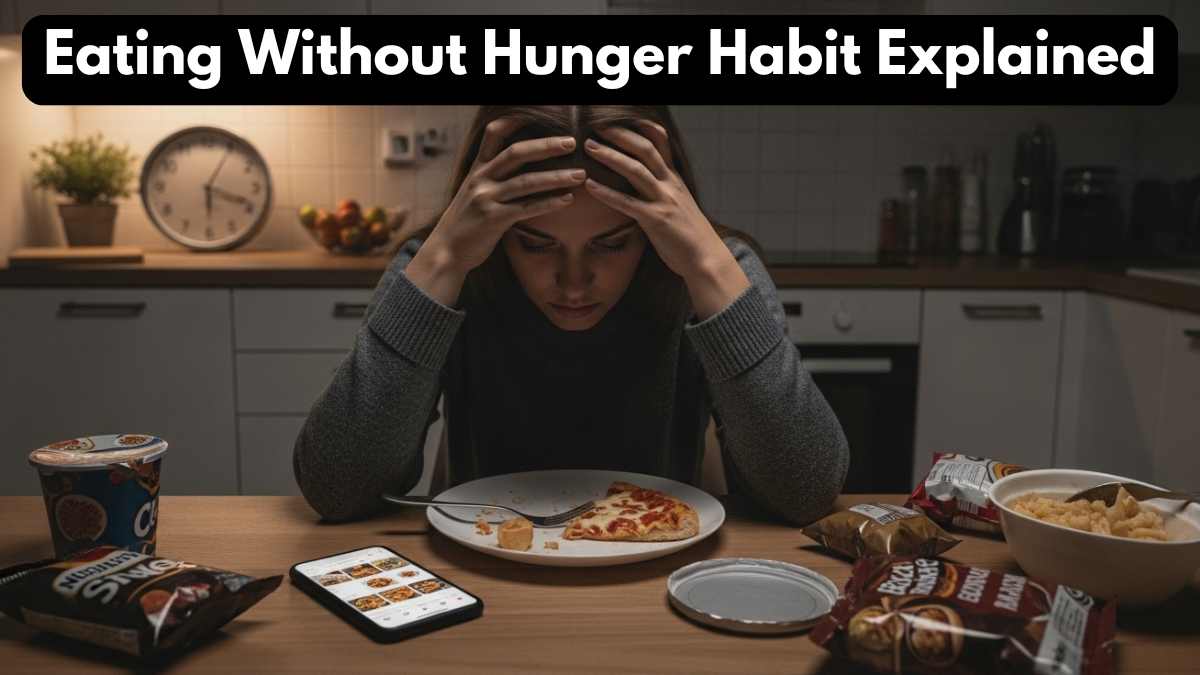
Why the Eating Without Hunger Habit Is Increasing
Modern life encourages convenience and constant access to food. Snacks are available everywhere—at work, at home, during travel, and even while scrolling on a phone. This easy availability strengthens the eating without hunger habit, where eating becomes automatic instead of intentional.
Stress is one of the strongest causes of the emotional eating pattern. People often use food as a quick emotional response to frustration, loneliness, anxiety, or exhaustion. Instead of asking whether they are hungry, they respond to how they feel emotionally. This creates unhealthy food behavior over time.
Another major reason is distraction. Many people eat while working, studying, or watching content online. This reduces awareness of fullness and increases the chances of developing an eating without hunger habit without even noticing it.
Common Signs of Emotional Eating Pattern
Recognizing the emotional eating pattern is the first step toward healthier habits. Many people assume hunger is the reason, when actually the trigger is emotional discomfort.
Common signs include:
- Craving food suddenly during stress or sadness
- Eating out of boredom rather than appetite
- Snacking while watching TV or using a phone
- Feeling guilty after unnecessary eating
- Reaching for comfort foods repeatedly
- Eating even after feeling physically full
These signs show how the eating without hunger habit often develops quietly through repeated emotional responses and unconscious food behavior patterns.
How Food Behavior Shapes Daily Eating Habits
Daily food behavior is influenced by routine more than most people realize. If someone always eats while working or always snacks late at night, the body starts linking those situations with eating, even without hunger.
The eating without hunger habit becomes stronger when food is used as a reward. For example, people may eat sweets after a stressful day or order extra snacks as a form of emotional relief. This supports the emotional eating pattern, where food becomes connected to mood management instead of nourishment.
Family habits also matter. Children who grow up seeing food used for comfort may continue the same food behavior into adulthood. This makes emotional eating a learned response rather than a temporary habit.
Comparison Between Physical Hunger and Emotional Eating
| Physical Hunger | Emotional Eating |
|---|---|
| Builds gradually | Starts suddenly |
| Any food can satisfy | Specific comfort foods are desired |
| Stops when full | Often continues after fullness |
| No guilt after eating | Often followed by regret |
| Based on body need | Triggered by emotions |
This table helps explain the difference between normal hunger and the emotional eating pattern, making it easier to identify the real reason behind the eating without hunger habit.
How to Break the Eating Without Hunger Habit
Changing the eating without hunger habit starts with awareness. Before eating, it helps to pause and ask whether the body is truly hungry or if emotions are driving the urge.
Helpful strategies include:
- Keep a simple food and mood journal
- Drink water before reaching for snacks
- Delay eating for 10 minutes and reassess
- Identify emotional triggers like stress or boredom
- Build non-food comfort habits like walking or journaling
- Avoid eating during screen time when possible
Reducing the emotional eating pattern does not mean removing comfort completely. It means creating healthier emotional responses and improving long-term food behavior.
Mindful eating also helps. Sitting down, eating slowly, and paying attention to fullness can reduce automatic snacking and improve body awareness.
Long-Term Effects of Unhealthy Food Behavior
If the eating without hunger habit continues for a long time, it can affect more than weight. It may create digestive discomfort, poor energy levels, disrupted sleep, and stronger emotional dependence on food.
The repeated emotional eating pattern can also increase frustration and guilt. People may feel trapped in a cycle where stress causes eating, and eating causes more emotional discomfort. This weakens healthy food behavior and makes change feel difficult.
Balanced eating is not about strict control—it is about understanding the body’s signals and building trust with food again. Small consistent changes are more effective than extreme restrictions.
The goal is not perfection, but awareness and healthier emotional choices.
Conclusion
The rise of the eating without hunger habit reflects how modern routines, stress, and emotional pressure influence daily life. Many people are not eating because they are hungry—they are eating because food feels like comfort, distraction, or reward.
Understanding the emotional eating pattern helps people respond with awareness instead of guilt. Improving daily food behavior creates healthier relationships with both food and emotions.
Breaking this habit takes patience, not punishment. When people learn to recognize true hunger and emotional triggers separately, they build stronger physical and emotional well-being for the long term.
FAQs
What is eating without hunger habit?
The eating without hunger habit refers to eating food even when the body does not need it physically, often due to stress, boredom, or emotional triggers.
How is emotional eating pattern different from normal hunger?
The emotional eating pattern usually starts suddenly and involves cravings for specific comfort foods, while physical hunger builds gradually and can be satisfied with regular meals.
Can stress cause unhealthy food behavior?
Yes, stress is one of the biggest reasons for unhealthy food behavior, especially when people use food as comfort instead of addressing emotional needs directly.
How can I stop eating without hunger?
You can reduce the eating without hunger habit by identifying triggers, practicing mindful eating, delaying cravings, and building healthier emotional coping methods.
Is emotional eating always harmful?
Occasional emotional eating is normal, but repeated emotional eating pattern habits can affect health, mood, and long-term food behavior if left unmanaged.
Click here to learn more