Unwritten Social Rules quietly shape everyday life, guiding how people act, speak, and react without formal instruction. From knowing when to lower your voice to understanding personal space, these invisible rules influence nearly every interaction. What makes them powerful is that most people follow them automatically, rarely questioning their origin. Rooted deeply in Social behavior, these rules help maintain order, reduce conflict, and create a shared sense of understanding within communities. Recognizing the role of Unwritten Social Rules reveals how much human interaction depends on silent agreements rather than spoken laws.
How Unwritten Social Rules Develop Over Time
Unwritten Social Rules are learned through observation rather than direct teaching. Children absorb them by watching adults, peers, and authority figures respond to social situations. Over time, repeated patterns of Social behavior become normalized, forming expectations about what is acceptable or inappropriate. These rules evolve with culture, technology, and generational change, yet they remain largely invisible. People often realize their existence only when someone breaks them, causing discomfort or confusion in otherwise routine interactions.
The Role of Social Behavior in Enforcing These Rules
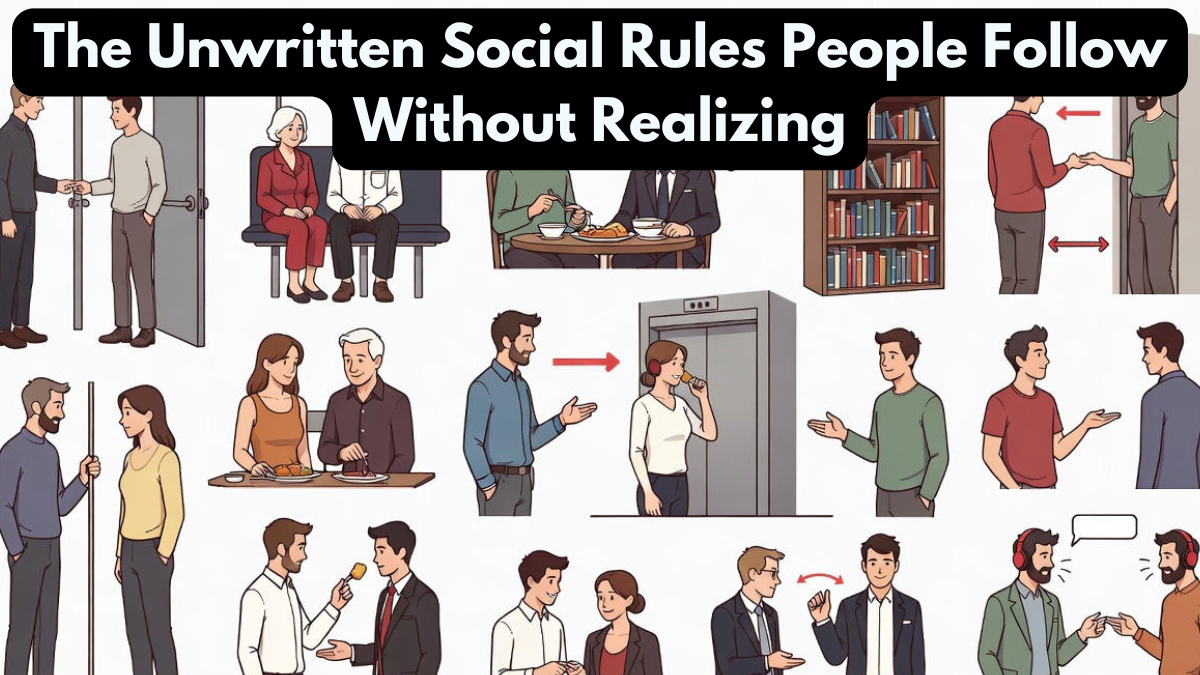
Social behavior acts as both the foundation and enforcement mechanism for Unwritten Social Rules. Approval, disapproval, body language, and subtle cues reinforce compliance without formal punishment. For example, silence in elevators or polite nods to strangers are rarely discussed but widely practiced. When someone violates these norms, reactions such as awkward pauses or avoidance signal that a boundary has been crossed. This collective enforcement keeps Unwritten Social Rules functioning smoothly within society.
Everyday Examples People Follow Automatically
Many Unwritten Social Rules are so ingrained that people follow them without conscious thought. These behaviors vary slightly by culture but serve similar purposes worldwide.
| Situation | Common Unwritten Rule | Purpose |
|---|---|---|
| Public transport | Avoid prolonged eye contact | Maintain personal comfort |
| Conversations | Take turns speaking | Show respect |
| Queues | Wait your turn | Ensure fairness |
| Shared spaces | Lower voice volume | Reduce disturbance |
These examples show how Social behavior creates predictable interactions, making social environments easier to navigate.
Why Breaking Unwritten Social Rules Feels Uncomfortable
Violating Unwritten Social Rules often triggers anxiety, embarrassment, or social tension. This reaction is tied to the human need for belonging and acceptance within groups. Social behavior relies on predictability, and when someone disrupts it, others may feel unsettled even if no real harm occurs. The discomfort acts as a corrective signal, encouraging individuals to realign with group expectations and maintain social harmony.
Conclusion
Unwritten Social Rules are the invisible framework holding everyday interactions together. Guided by shared Social behavior, they simplify communication, reduce misunderstandings, and create a sense of order without explicit enforcement. Becoming aware of these hidden rules allows people to navigate social situations more consciously and empathetically. Understanding them also highlights how deeply human connection depends on silent cooperation rather than formal instruction.
FAQs
What are unwritten social rules?
Unwritten social rules are informal guidelines people follow instinctively, shaped by Social behavior and cultural norms rather than written laws.
Why do people follow these rules without questioning them?
Most Unwritten Social Rules are learned through observation and repetition, becoming automatic parts of daily Social behavior.
Do unwritten social rules change over time?
Yes, Unwritten Social Rules evolve as societies, technologies, and values change, reflecting shifts in collective Social behavior.
What happens when someone ignores unwritten social rules?
Ignoring Unwritten Social Rules often leads to discomfort or social disapproval, reinforcing their importance in guiding Social behavior.
Click here to learn more