The concept of quiet quitting has moved far beyond a passing workplace trend and has become a defining signal of how modern employees view work in 2026. Rather than employees resigning outright, quiet quitting reflects a shift where individuals consciously choose to meet job expectations without overextending themselves. This evolving behavior highlights deeper changes in workplace culture, reshapes the employee mindset, and challenges long-held assumptions about productivity. As organizations struggle to retain talent, understanding why quiet quitting is growing has become essential for sustainable business success.
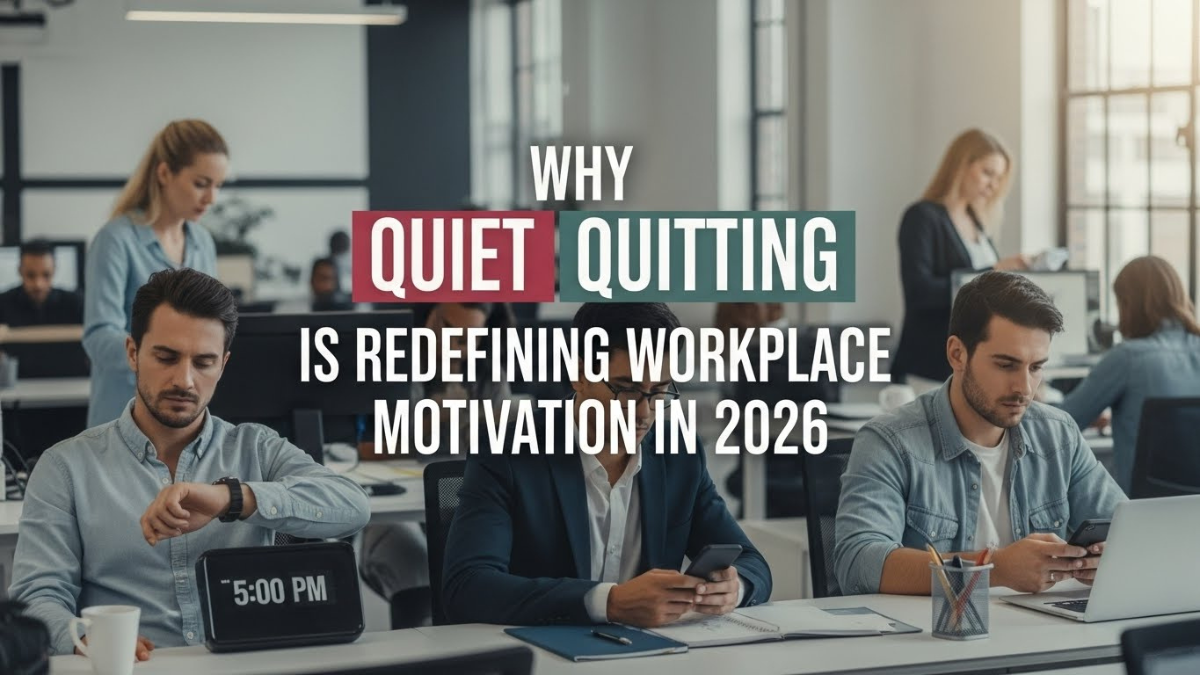
How Quiet Quitting Reflects a Changing Workplace Culture
Modern workplace culture no longer glorifies burnout or constant availability. Instead, employees are prioritizing mental well-being, flexibility, and fair boundaries. Quiet quitting emerges when workers feel disconnected from unrealistic demands or lack recognition for extra effort. This phenomenon does not indicate laziness; rather, it signals a response to environments that fail to evolve with workforce expectations. Companies that ignore these changes in workplace culture often experience disengagement, lower morale, and declining productivity, even if employees remain physically present.
The Employee Mindset Shift Driving Quiet Quitting
At the core of quiet quitting lies a transformed employee mindset. Workers today value purpose, autonomy, and balance more than hierarchical approval. This employee mindset prioritizes sustainable performance over constant overachievement. When growth opportunities, feedback, or respect are missing, employees protect their energy by disengaging emotionally. As this employee mindset becomes more common, organizations must recognize that motivation is no longer fueled by fear or obligation but by trust and alignment with personal values.
Quiet Quitting and Its Impact on Productivity Metrics
Traditional measures of productivity focus on output volume, long hours, or visible busyness. However, quiet quitting exposes the flaws in these outdated metrics. While employees may still complete assigned tasks, the lack of discretionary effort can reduce innovation, collaboration, and long-term value creation. Sustainable productivity now depends on engagement rather than exhaustion. Companies that understand quiet quitting as a warning sign rather than a threat are better positioned to redesign workflows that enhance real productivity outcomes.
Factors Contributing to Quiet Quitting in 2026
Several interconnected factors have accelerated quiet quitting across industries. These influences directly affect workplace culture, employee mindset, and organizational productivity.
- Lack of transparent career progression
- Poor leadership communication
- Inflexible work models
- Unbalanced workloads
- Limited recognition and feedback
The table below highlights how these factors influence employee behavior:
| Key Factor | Impact on Employee Mindset | Effect on Productivity |
|---|---|---|
| Limited growth | Reduced motivation | Lower innovation |
| Poor leadership | Emotional disengagement | Slower decision-making |
| Rigid schedules | Increased burnout | Inconsistent performance |
| Lack of recognition | Decreased loyalty | Minimal discretionary effort |
Addressing these issues helps organizations reduce quiet quitting while strengthening workplace culture.
Strategies Organizations Use to Respond to Quiet Quitting
Forward-thinking companies are adapting by redefining workplace culture to support engagement. Open communication, flexible scheduling, skills-based growth, and meaningful feedback loops help reset the employee mindset. By focusing on outcomes rather than hours, leaders can rebuild trust and boost productivity without pressuring employees into burnout. Recognizing quiet quitting as feedback allows organizations to evolve rather than resist change.
Conclusion: Quiet Quitting as a Catalyst for Workplace Evolution
Rather than viewing quiet quitting as a threat, organizations should see it as a catalyst for necessary transformation. It reflects a deeper call for healthier workplace culture, a balanced employee mindset, and sustainable productivity models. Businesses that listen, adapt, and invest in employee well-being will not only reduce quiet quitting but also build resilient, future-ready teams capable of thriving beyond 2026.
FAQs
What does quiet quitting really mean in today’s workplace?
Quiet quitting refers to employees choosing to perform their defined job roles without taking on extra unpaid responsibilities, often due to dissatisfaction with workplace culture.
Is quiet quitting harmful to productivity?
While short-term productivity may appear stable, long-term innovation and engagement can decline if the underlying employee mindset is not addressed.
Why is quiet quitting increasing in 2026?
Changes in employee mindset, evolving workplace culture, and a focus on mental well-being are key reasons behind the rise of quiet quitting.
How can employers reduce quiet quitting?
Improving leadership communication, offering flexibility, and aligning goals with employee values help rebuild engagement and reduce quiet quitting.
Does quiet quitting mean employees want to leave?
Not necessarily. Many employees choose quiet quitting as a way to protect balance rather than exit an unsupportive workplace culture.
Click here to learn more