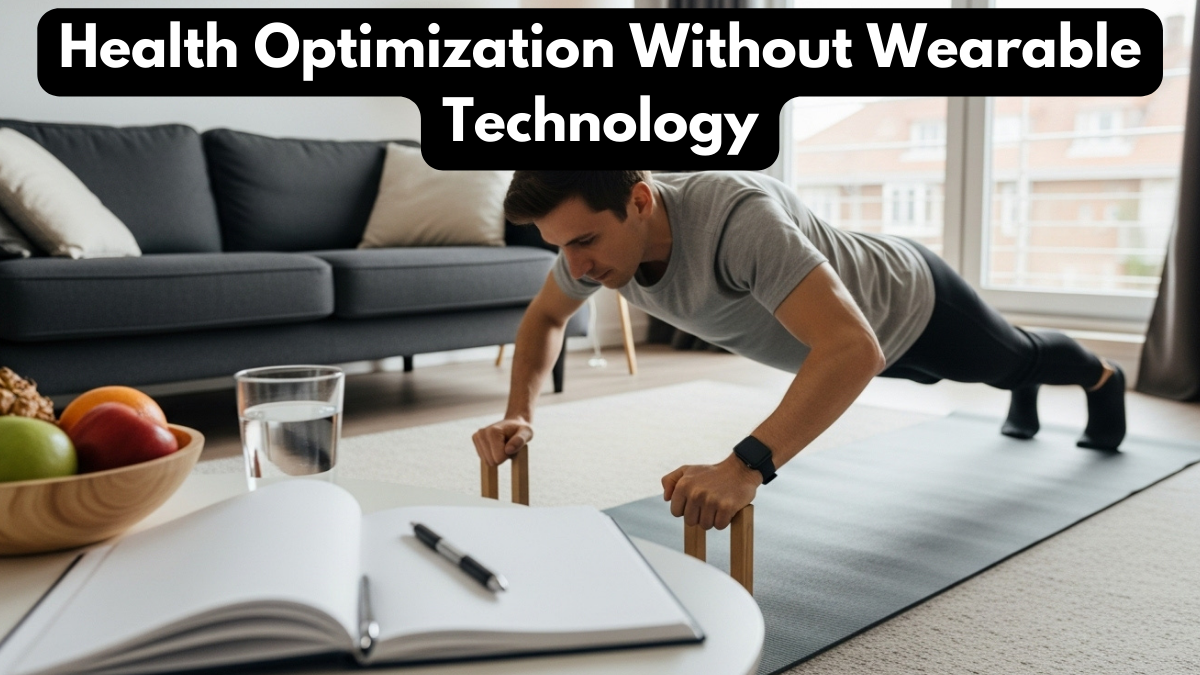
Wearable devices have become synonymous with modern health tracking. From counting steps to monitoring sleep and heart rate, technology promises constant insight into the body. Yet, many people feel overwhelmed by numbers, alerts, and performance metrics. A growing movement is pushing back against this dependence. Health optimization is increasingly being pursued without devices, focusing instead on awareness, routine, and intuition. By embracing natural wellness principles and mindful biohacking, individuals are discovering that meaningful health improvement does not require constant digital monitoring.
Why Health Optimization Is Moving Beyond Wearables
The appeal of wearables lies in data, but data alone does not guarantee better health. Many users experience anxiety, obsession, or fatigue from continuous tracking. This has led people to question whether external devices are truly necessary for health optimization. In response, a quieter approach is gaining traction, one that prioritizes lived experience over metrics.
This shift aligns closely with natural wellness, which emphasizes listening to the body rather than outsourcing awareness to technology. Instead of chasing optimal scores, individuals focus on consistency, recovery, and balance. Within this framework, biohacking becomes less about gadgets and more about understanding how simple inputs affect physical and mental performance.
Natural Wellness As The Foundation Of Health Optimization
At its core, natural wellness centers on aligning daily habits with the body’s biological needs. Sleep, nutrition, movement, sunlight, and stress management form the foundation of sustainable health optimization. These elements existed long before wearables and remain the most powerful levers for well-being.
By prioritizing natural rhythms, people develop internal feedback systems. Energy levels, mood, appetite, and sleep quality become guides. This approach reduces dependence on external validation and strengthens self-trust. As a result, health optimization becomes intuitive rather than technical, and biohacking becomes a process of observation rather than instrumentation.
Biohacking Without Devices: A Simpler Approach
The term biohacking often evokes images of sensors and experimental technology. However, the original spirit of biohacking focuses on small, intentional changes that improve performance. Without wearables, this approach relies on experimentation through habits and reflection.
Common non-digital biohacking practices include:
- Optimizing sleep schedules
- Exposure to natural light
- Strategic fasting or meal timing
- Breathwork and stress regulation
- Cold or heat exposure
These methods support health optimization by working with biology rather than measuring it constantly. When aligned with natural wellness, biohacking becomes accessible, sustainable, and deeply personal.
Comparing Wearable-Based And Intuitive Health Optimization
A comparison highlights why many are choosing to optimize health without devices.
| Aspect | Wearable-Based Optimization | Device-Free Optimization |
|---|---|---|
| Focus | Metrics and data | Awareness and habits |
| Stress levels | Often increased | Generally reduced |
| Dependency | Technology driven | Self-directed |
| Natural wellness | Secondary | Central |
| Biohacking approach | Tool-heavy | Habit-based |
This contrast shows that health optimization does not require constant tracking. In many cases, removing devices strengthens connection to bodily signals and reinforces natural wellness principles.
Mental Health And The Cost Of Constant Tracking
One overlooked consequence of wearable dependence is mental strain. Constant feedback can create pressure to perform rather than recover. Missed targets may lead to guilt, while good scores can create false reassurance. This dynamic can undermine long-term health optimization.
By stepping away from wearables, individuals often experience relief. They learn to assess well-being holistically rather than numerically. This supports natural wellness by reducing stress and restoring balance. In this context, biohacking becomes supportive rather than competitive.
Relearning Body Awareness And Internal Feedback
Without wearables, people must relearn how to read their bodies. Hunger cues, fatigue, soreness, and mood shifts provide valuable information. Developing this awareness is a skill that strengthens over time and directly contributes to health optimization.
This process aligns with traditional wellness practices that prioritize mindfulness and presence. By tuning into internal signals, individuals practice a form of biohacking rooted in self-observation. The result is a deeper understanding of personal needs and limits, reinforcing natural wellness without external dependency.
Sustainable Health Optimization Through Lifestyle Design
Sustainable health optimization depends on consistency, not constant optimization. Designing daily routines that support sleep, movement, and nourishment reduces the need for tracking. When healthy behaviors become automatic, data becomes less relevant.
Lifestyle design focuses on environments that encourage good choices. Simple changes like regular meal times, walking routines, and screen boundaries support natural wellness effortlessly. In this model, biohacking is embedded into daily life rather than layered on top of it.
The Role Of Simplicity In Long-Term Wellness
Simplicity is often underestimated in discussions of health optimization. Removing complexity allows individuals to focus on what truly matters. Without dashboards and alerts, attention shifts to quality of life rather than performance metrics.
This simplicity strengthens natural wellness by reducing cognitive load and decision fatigue. Over time, the body responds positively to consistent care. Biohacking without devices proves that progress does not require constant measurement, only thoughtful action.
The Future Of Health Optimization Beyond Technology
As awareness of digital fatigue grows, more people will explore health optimization beyond wearables. This does not mean rejecting technology entirely, but redefining its role. Tools may be used occasionally rather than continuously.
The future likely belongs to hybrid approaches where natural wellness and intuition lead, supported by technology when necessary. In this balance, biohacking becomes human-centered rather than device-driven, emphasizing sustainability over optimization obsession.
Conclusion
The movement toward health optimization without wearable technology reflects a desire for simplicity, awareness, and balance. By grounding progress in natural wellness and thoughtful biohacking, individuals rediscover the power of listening to their bodies. True optimization is not about constant tracking, but about consistent care. In stepping away from devices, many find that health becomes clearer, calmer, and more sustainable than ever before.
FAQs
What is health optimization without wearables?
It is improving physical and mental well-being through habits, awareness, and routine rather than relying on tracking devices.
How does natural wellness support health optimization?
Natural wellness focuses on sleep, nutrition, movement, and stress management, which are core drivers of long-term health.
Can biohacking work without technology?
Yes, biohacking can involve habit changes, environmental adjustments, and self-observation without digital tools.
Are wearables harmful to health optimization?
They are not inherently harmful, but overreliance can increase stress and reduce body awareness.
Who benefits most from device-free health optimization?
Individuals seeking balance, reduced anxiety, and sustainable wellness often benefit the most.
Click here to learn more