Digital human twins are rapidly transforming how healthcare research approaches disease prediction, treatment planning, and long-term health management. Advances in computing power, artificial intelligence, and biomedical data collection have made it possible to create virtual representations of the human body that mirror real physiological processes. These digital human twins allow researchers to study health outcomes in a controlled, risk-free environment, offering insights that traditional clinical trials alone cannot provide.
At a strategic level, digital human twins address one of healthcare’s biggest challenges: individual variability. Every patient responds differently to treatment based on genetics, lifestyle, and environmental factors. By using complex data models that integrate biological, behavioral, and clinical information, researchers can move beyond one-size-fits-all approaches and toward more precise healthcare solutions.
How simulations are redefining medical research
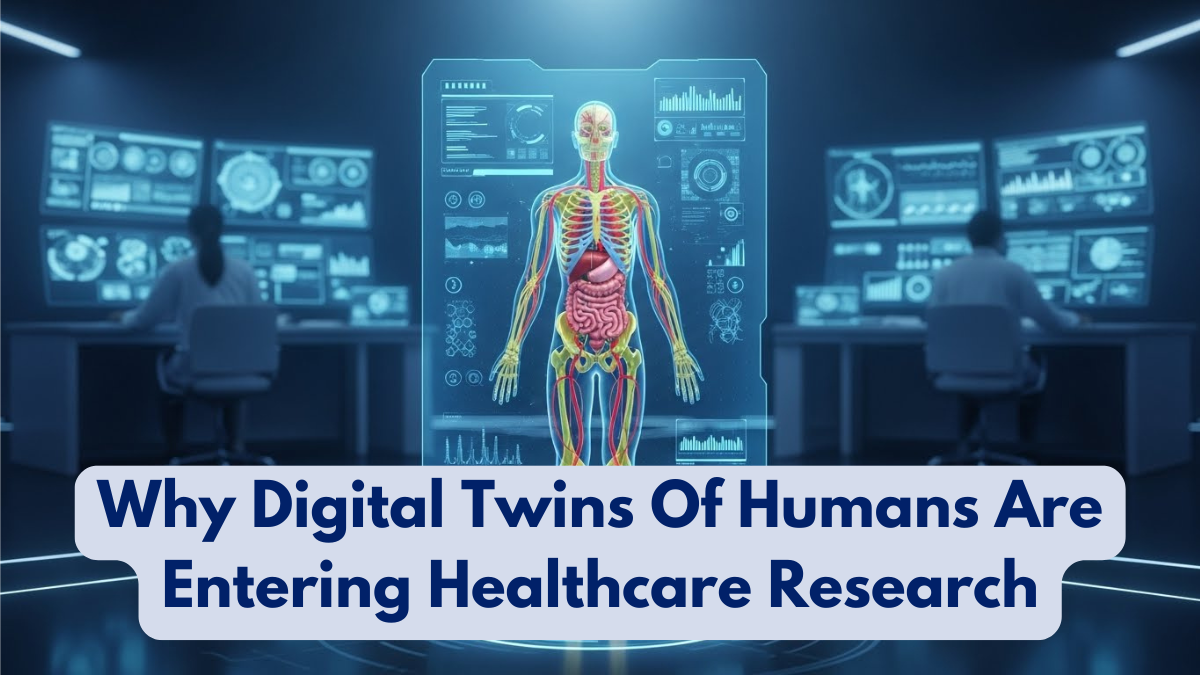
One of the most powerful applications of digital human twins lies in advanced simulations that replicate human anatomy and physiology. These simulations allow researchers to test how diseases progress, how organs respond to stress, and how treatments interact with the body over time. Instead of relying solely on population averages, scientists can observe outcomes at an individual level using virtual replicas.
Through repeated simulations, digital human twins enable researchers to model thousands of scenarios quickly. This accelerates drug development and reduces dependence on costly and time-consuming physical trials. The ability to run multiple simulations also improves safety by identifying potential risks before treatments reach real patients.
Role of data models in building accurate digital twins
At the core of digital human twins are sophisticated data models that combine inputs from medical imaging, genomics, wearable devices, and electronic health records. These data models continuously update as new information becomes available, allowing the digital twin to evolve alongside the individual it represents. This dynamic nature sets digital human twins apart from static medical records.
The accuracy of data models determines how reliable predictions from digital human twins can be. Machine learning algorithms refine these data models by identifying patterns across vast datasets. As a result, researchers can simulate disease progression and treatment outcomes with increasing precision, making digital human twins a valuable research asset.
Advancing personalized medicine through digital twins
A major reason digital human twins are gaining traction is their potential to revolutionize personalized medicine. Instead of applying standardized treatment protocols, clinicians can use digital human twins to test therapies virtually and identify which option works best for a specific patient. This approach significantly reduces trial-and-error in medical decision-making.
By combining simulations, data models, and real-time patient data, digital human twins support highly tailored interventions. In the context of personalized medicine, this means better treatment efficacy, fewer side effects, and improved patient outcomes. As healthcare systems prioritize value-based care, digital human twins offer a pathway to more efficient and patient-centered treatment strategies.
Key advantages of digital human twins in healthcare research include:
- Advanced simulations for disease modeling
- Adaptive data models that evolve with patient data
- Enhanced support for personalized medicine
- Reduced research costs and faster innovation
- Improved safety through virtual testing
The table below illustrates how digital human twins compare with traditional research methods:
| Aspect | Traditional Research | Digital human twins |
|---|---|---|
| Patient variability | Limited consideration | Individualized data models |
| Testing environment | Physical trials | Virtual simulations |
| Speed of analysis | Slow and sequential | Rapid scenario testing |
| Risk to patients | Direct exposure | Risk-free virtual testing |
| Personalization | Minimal | Strong personalized medicine focus |
Ethical considerations and future outlook
While digital human twins offer immense promise, they also raise ethical and governance questions. Data privacy, consent, and ownership of health-related data models must be carefully managed. Researchers must ensure that simulations are transparent and unbiased to prevent flawed conclusions that could affect real-world care.
In conclusion, digital human twins are entering healthcare research because they bridge the gap between data-driven insights and individualized care. By leveraging advanced simulations, adaptive data models, and the principles of personalized medicine, digital human twins are reshaping how diseases are studied and treated. As technology matures and ethical frameworks evolve, digital human twins are likely to become a cornerstone of future healthcare innovation.
FAQs
What are digital human twins?
Digital human twins are virtual representations of individuals created using biological, clinical, and behavioral data to model health outcomes.
How do simulations support digital human twins?
Simulations allow researchers to test disease progression and treatments virtually, improving safety and efficiency.
Why are data models important in digital human twins?
Data models integrate multiple data sources to ensure accurate and evolving representations of human physiology.
How do digital human twins improve personalized medicine?
They enable virtual testing of treatments, helping tailor therapies to individual patients within personalized medicine frameworks.
Are there risks associated with digital human twins?
Risks include data privacy concerns and potential bias in data models, which require strong ethical oversight.
Click here to learn more