Building strong mental health routines is no longer just a wellness trend; it is a practical approach supported by modern psychology and neuroscience. Our minds respond positively to structure, consistency, and emotionally supportive environments. When people adopt meaningful routines, they begin to notice remarkable changes such as better focus, emotional balance, improved motivation, and natural anxiety relief. These powerful daily habits shape how we wake up, how we work, how we connect with others, and how we sleep at night. Today, experts worldwide emphasize that a healthy routine is one of the most effective ways to support overall wellbeing.
When you integrate mental health routines into your lifestyle, it is not about perfection, but about making small, sustainable shifts that protect emotional stability. Many individuals struggle because they wait for motivation instead of building simple structures into their daily habits that make emotional wellness easier to maintain. Research shows that the brain develops resilience through repetition and routine, allowing better regulation of thoughts and emotions. This naturally leads to calmer thinking, improved clarity, and long-lasting anxiety relief.
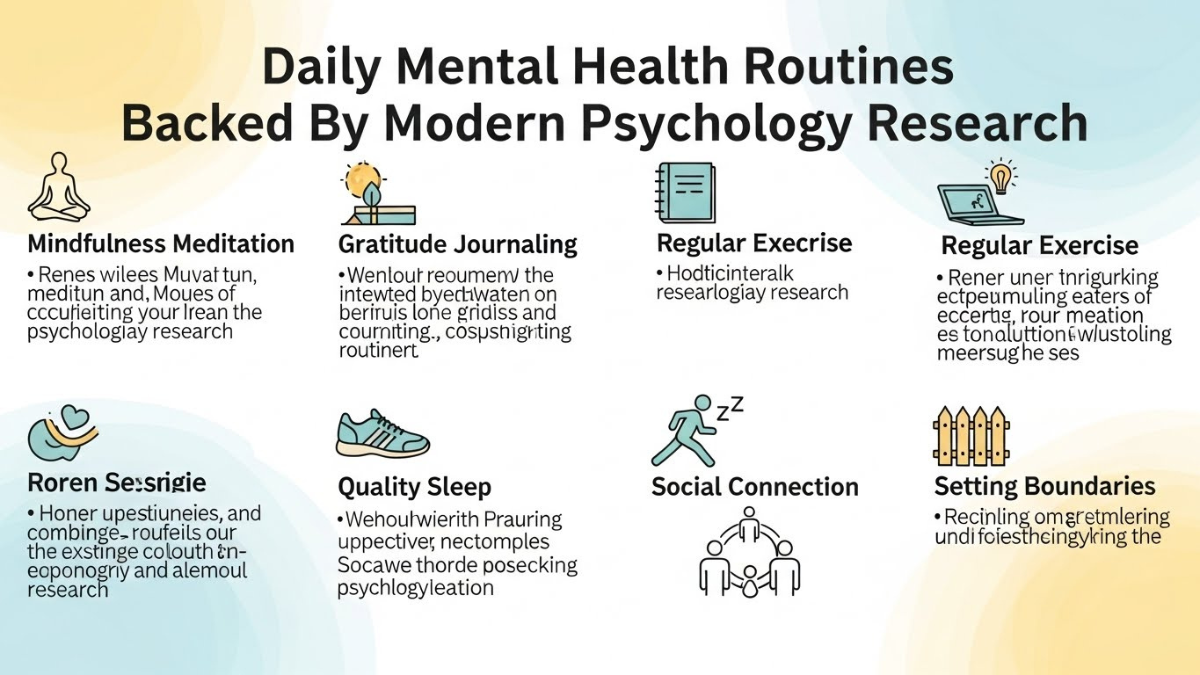
Why Mental Health Routines Matter Today
We live in a fast-paced world where stress, overwhelm, and mental fatigue happen easily. Consistent mental health routines act like emotional anchors, helping people stay grounded even during challenging days. When routines are thoughtfully designed, they help reduce mental overload, support self-awareness, and encourage emotional strength. These habits also offer powerful anxiety relief by stabilizing mood patterns and reducing uncertainty, which is a major trigger for stress.
Psychology research has repeatedly shown that structured daily habits help regulate the nervous system. This means your mind gradually learns to stay calm and balanced. Whether it is morning journaling, mindful breathing, or creating a peaceful bedtime ritual, each routine signals safety and control to the brain. Over time, this builds self-confidence, emotional maturity, and mental clarity. Simply put, mental health routines help you feel more in control of your life, improving personal happiness and long-term wellbeing.
Simple Daily Habits Backed By Research
Developing supportive daily habits does not need to be complicated. Small adjustments are often the most powerful. Start with activities that encourage self-reflection, emotional processing, and relaxation. These routines provide natural anxiety relief and help the brain slow down from constant overthinking. Many psychologists recommend incorporating activities that support movement, mindfulness, emotional expression, and rest.
Some powerful daily habits to include:
- Short mindfulness or breathing exercises for anxiety relief
- Gentle morning stretching or light exercise to activate positive hormones
- Keeping gratitude or reflection journals to support emotional processing
- Setting digital boundaries to avoid constant stress exposure
- Prioritizing meaningful social connection as part of your mental health routines
Helpful Table For Structuring Mental Health Routines
Below is a simple table that shows how structured mental health routines can fit into your everyday schedule while supporting daily habits and creating consistent anxiety relief.
| Time of Day | Routine Activity | Benefit |
|---|---|---|
| Morning | Meditation or deep breathing | Calms the mind and supports anxiety relief |
| Midday | Short walk or stretching | Improves mood and mental clarity |
| Evening | Journaling thoughts and feelings | Emotional release and stress processing |
| Night | Screen-free wind-down routine | Better sleep and balanced mental health routines |
Modern Psychology’s View On Routines
Modern psychology strongly supports mental health routines because they encourage emotional stability and behavioral consistency. Experts explain that routine builds predictability, which reduces stress reactions in the brain. When individuals repeatedly follow daily habits, they strengthen emotional resilience and reduce panic responses. These practices also support long-term behavioral changes that enhance lifestyle quality, overall happiness, and consistent anxiety relief.
Psychologists highlight that when routines are positive, they reshape thought patterns. This means better problem-solving ability, better emotional understanding, and stronger stress management. Whether dealing with work stress, personal challenges, or emotional struggles, strong mental health routines provide the foundation for healthier thinking. That is why more people worldwide are turning toward structured daily habits to protect their emotional wellbeing.
Conclusion
Strong mental health routines help people live calmer, clearer, and emotionally healthier lives. These scientifically supported daily habits give structure to the mind, reduce overwhelm, and create consistent anxiety relief. With consistency, patience, and self-compassion, these routines transform stress into stability and confusion into emotional clarity. Today, prioritizing mental health routines is not optional—it is essential for anyone who wants to build inner strength, emotional peace, and long-term psychological wellness.
FAQs
What are mental health routines?
Mental health routines are structured daily habits designed to support emotional wellbeing, stability, and natural anxiety relief.
How do daily habits improve mental health?
Consistent daily habits create predictability, reduce stress, stabilize emotions, and make it easier to manage overwhelming thoughts.
Can mental health routines reduce anxiety?
Yes, well-designed mental health routines support nervous system regulation, which leads to powerful and lasting anxiety relief.
How long does it take for routines to show results?
Most people begin noticing emotional improvements within a few weeks of following steady daily habits as part of their mental health care.
Click here to learn more